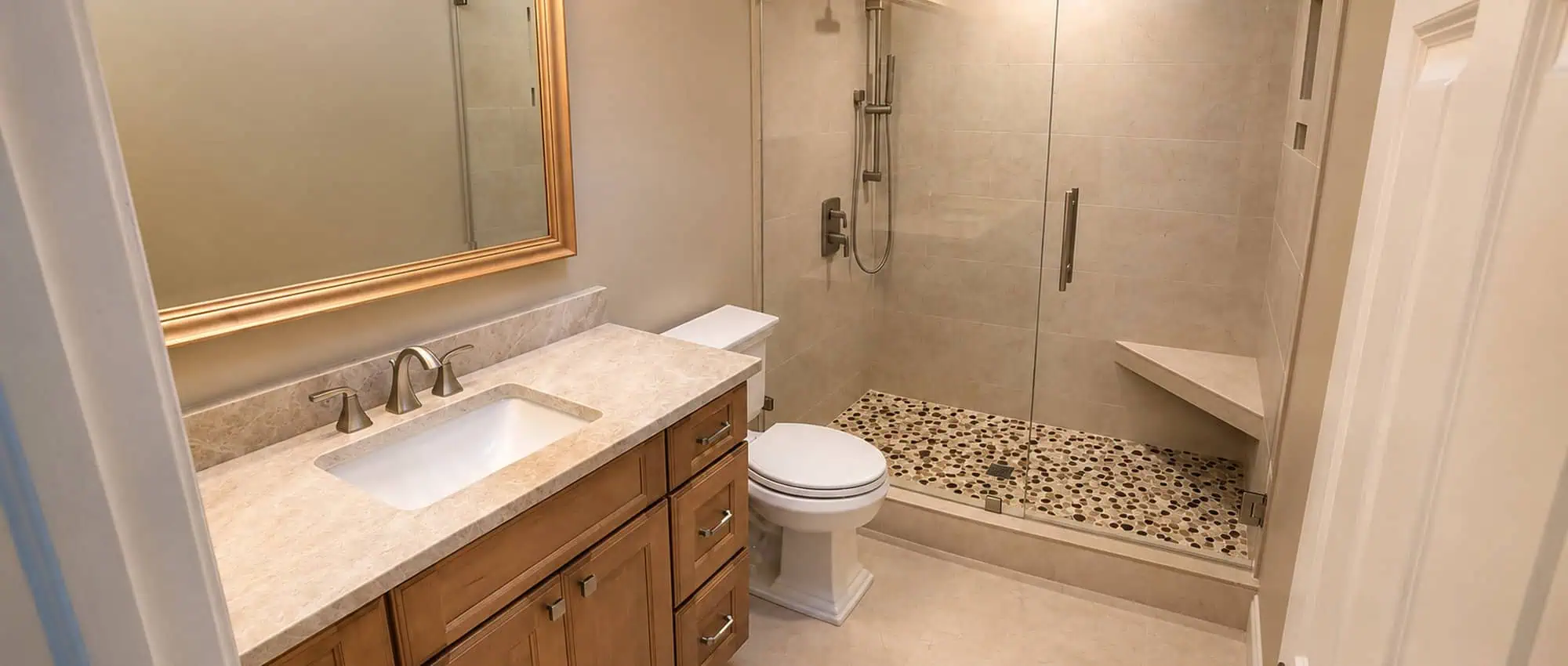
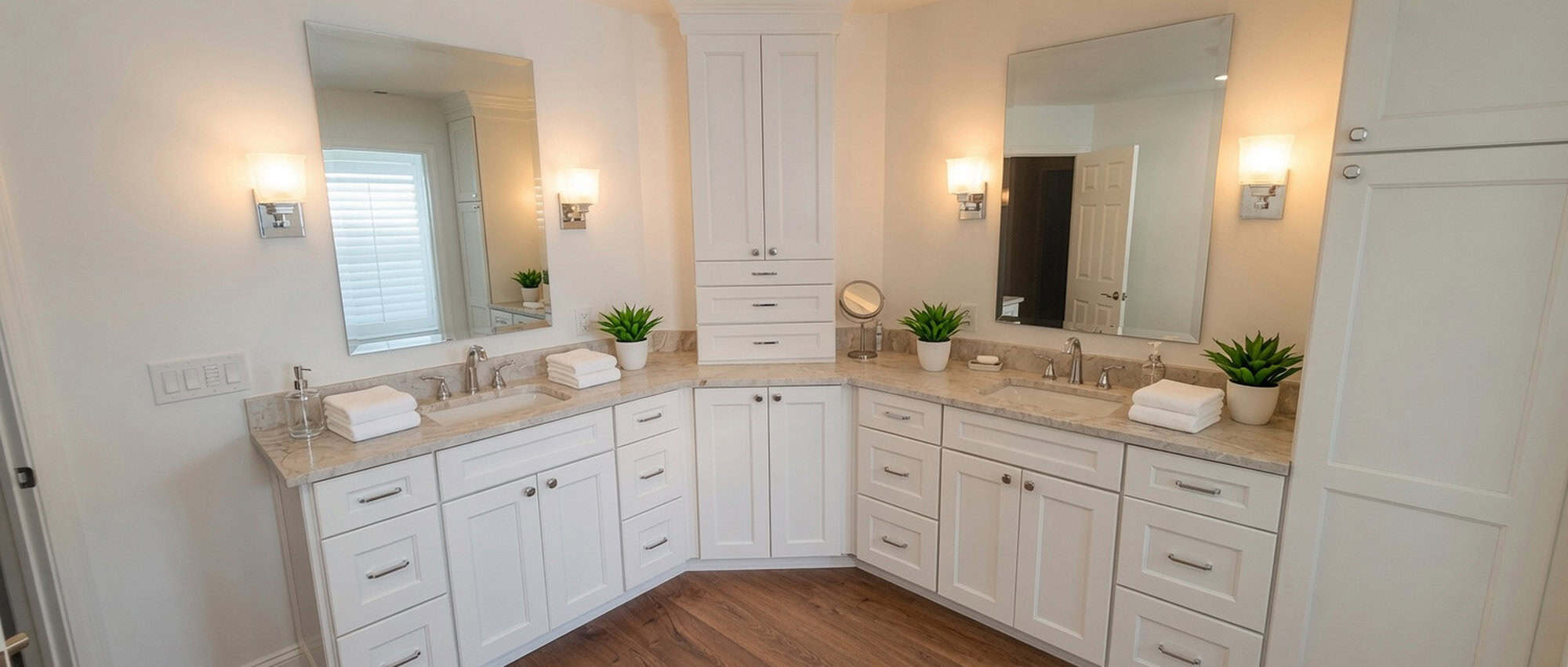
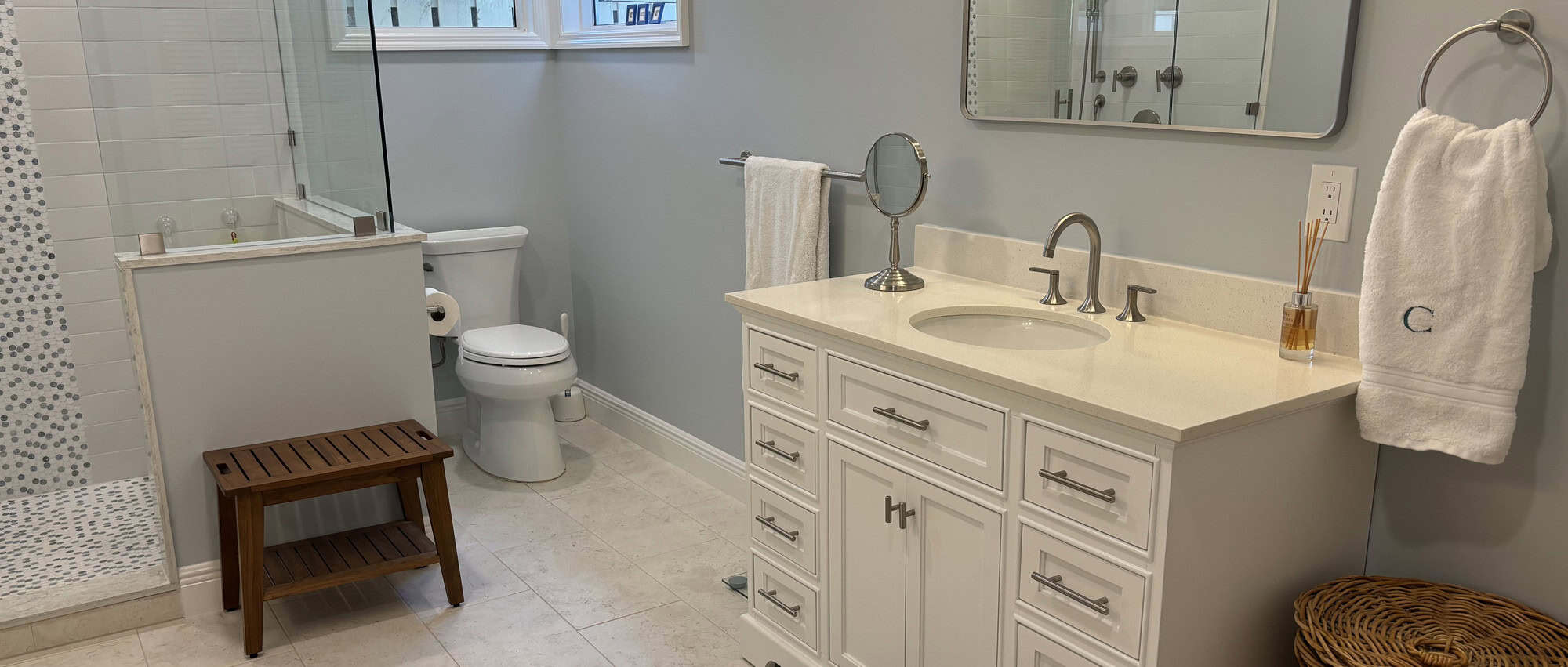
Bathroom Remodeling in Palm Beach County
The Most Complicated Room in Your House
It’s the smallest room in the house and it has the most going on in it. Plumbing, electrical, ventilation, waterproofing, tile, glass, cabinetry, lighting and storage all have to work together in about forty square feet — and every one of them ends up hidden behind a finish that’s expensive to open back up.
That’s why bathrooms are where shortcuts show up first, usually two or three years later, and usually as water somewhere it shouldn’t be. It’s also why the planning matters more here than anywhere else in the house.
We’ve been remodeling bathrooms for over thirty years — primary suites, guest baths, powder rooms, and the one small hall bathroom that four people have to share. We’ll walk your space, ask what’s actually wrong with the one you have, and tell you honestly what it takes to fix it.
What a Topnotch Bathroom Includes
Design & Layout
We measure, then we ask how you actually use the room — who’s in it, when, and what’s always in the way. Sometimes the fix is a better layout; sometimes it’s the same layout done properly.
Waterproofing & Tile
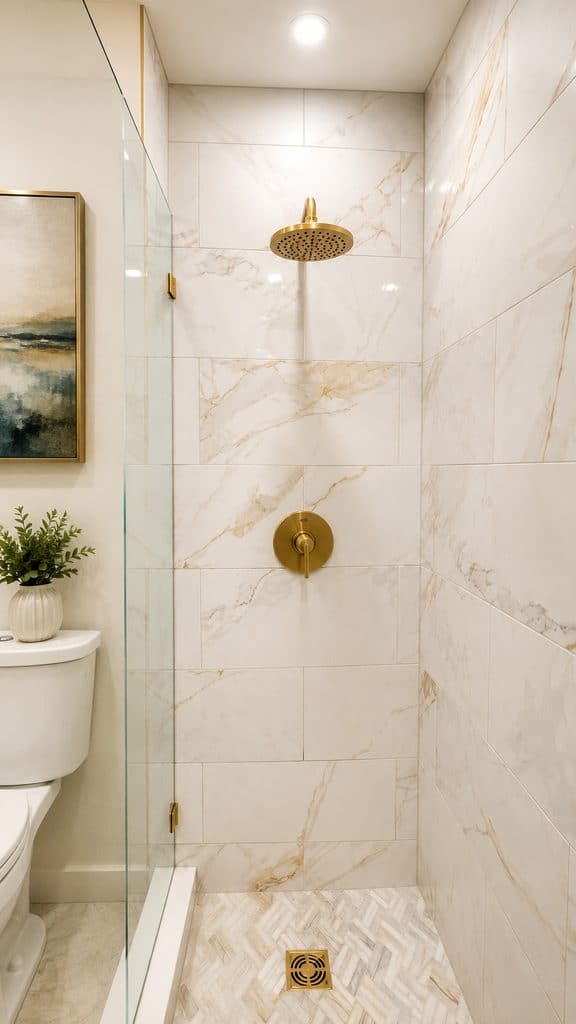
The part you’ll never see is the part that decides whether the bathroom lasts. Proper substrate, a real waterproofing membrane, and tile set to it — not over a shortcut.
Vanities, Fixtures & Light
American-made cabinetry, countertops, fixtures and lighting selected together so the finished room reads as one room. Storage planned around what you actually keep in there.
Every project is run by the same company from design through installation, with a five-year workmanship warranty behind it.
How a Bathroom Remodel Actually Goes
No mystery, no vanishing act. Here’s the sequence, and roughly what each stage feels like from your side of it.
Bathrooms are the most complicated room in a house to remodel well — and the least forgiving when they’re done badly. We’ve been building them for 30+ years of remodeling craftsmanship, and we’re a Florida State Certified Residential Contractor (CRC1332966), insured, and family-owned.
Licensed & Insured · 30+ Years · Family Owned & Operated · 5-Year Warranty · Free Estimates
Planning Your Bathroom: 8 Questions Worth Answering
The best bathroom projects are decided before anyone picks up a tool. These are the questions we walk through with you — worth thinking about before we even meet.
Not sure what you like yet? Pinterest and Houzz are genuinely useful for this — pictures tell us more than adjectives do. Our Houzz ideabooks are a good place to start.
Get Your Free Estimate
Call 561-244-9960 · Licensed & Insured · FL CRC1332966
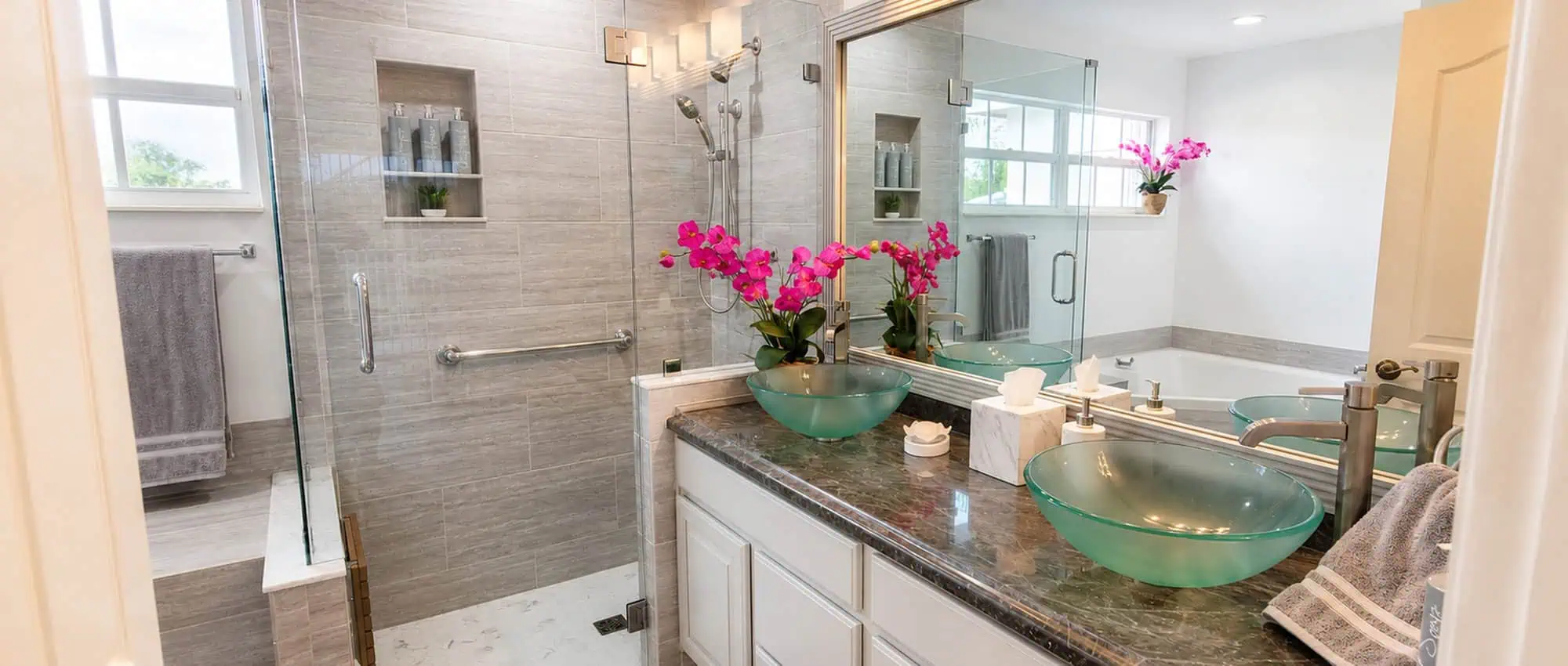
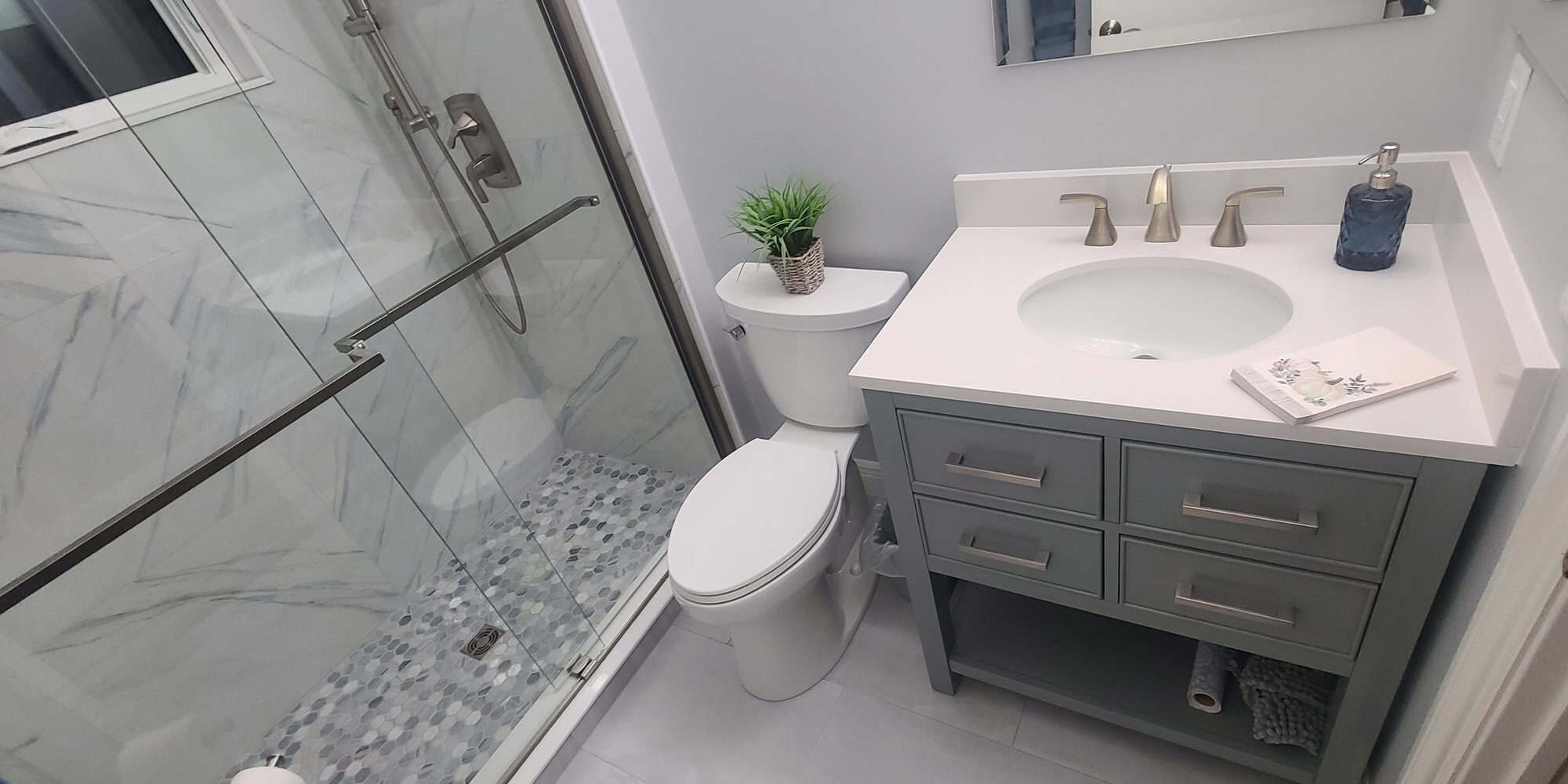
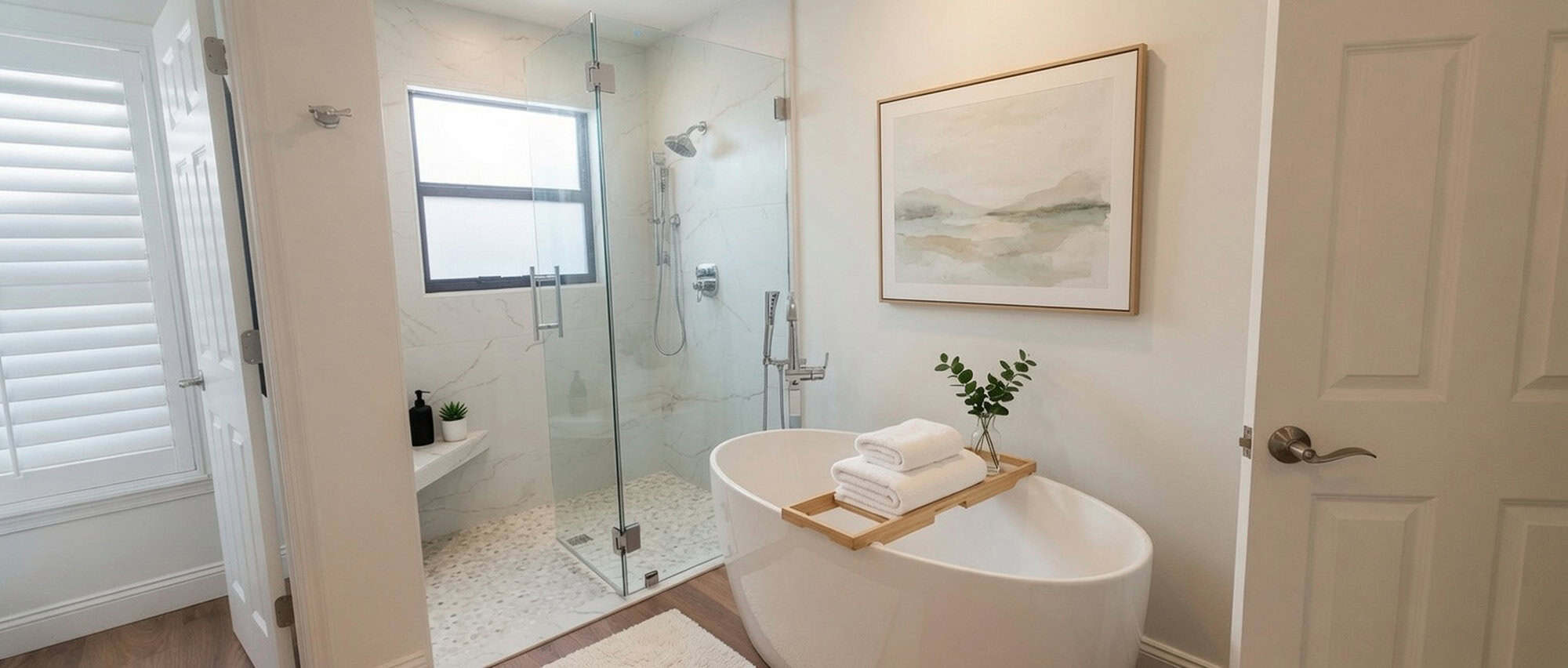
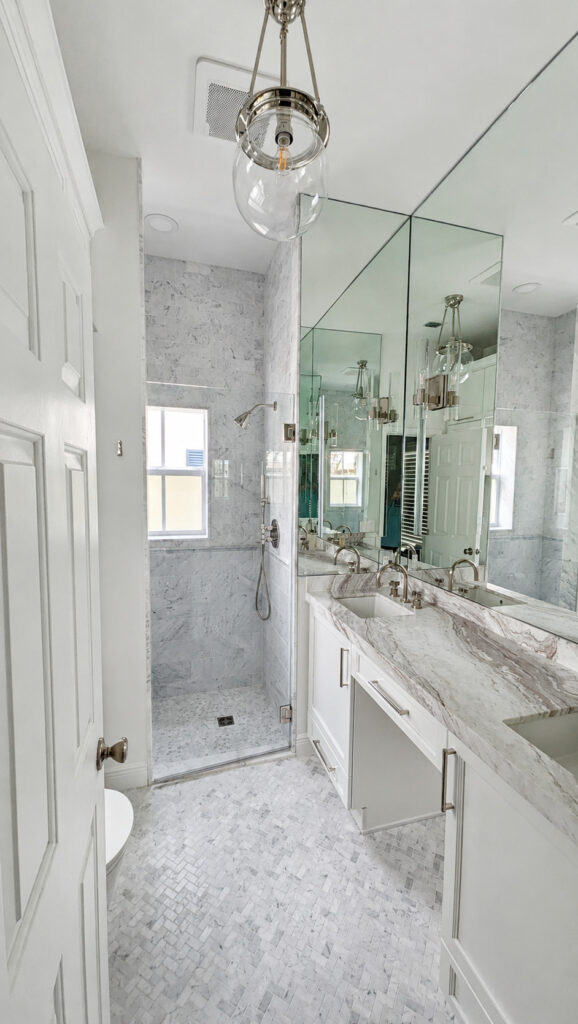
Bathrooms We’ve Built
Real projects, real tile, real glass. Click any bathroom to see it up close.
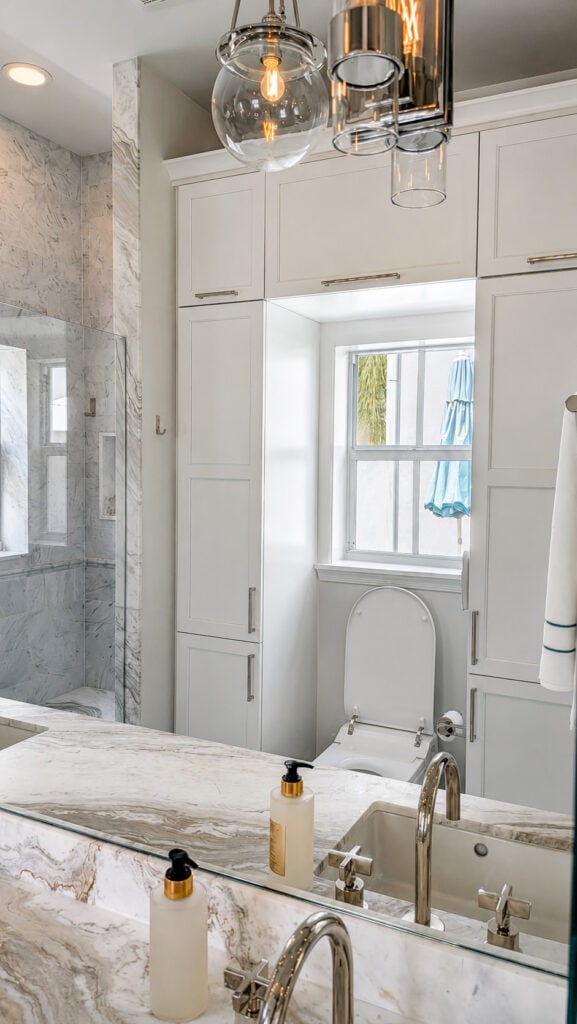
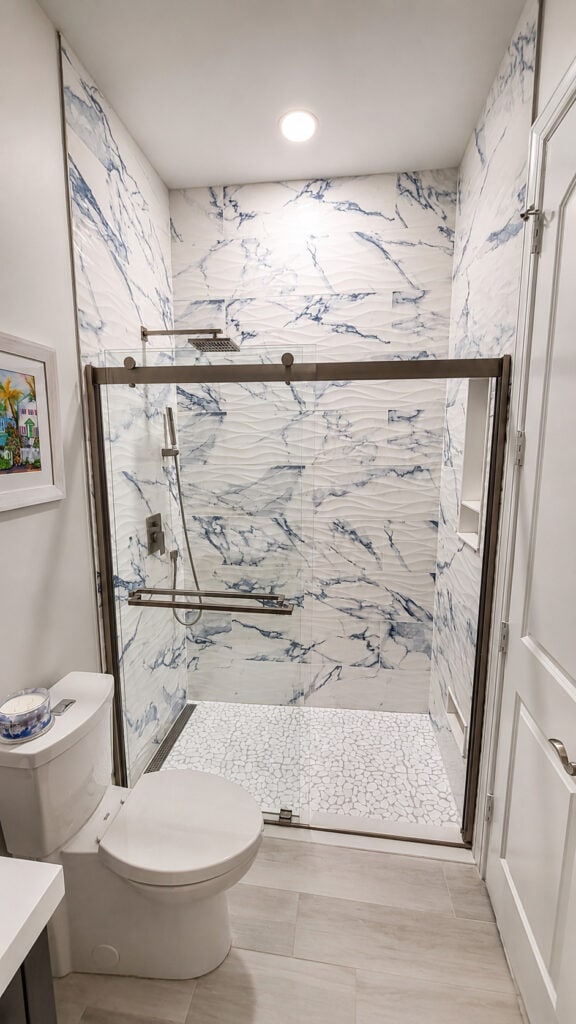
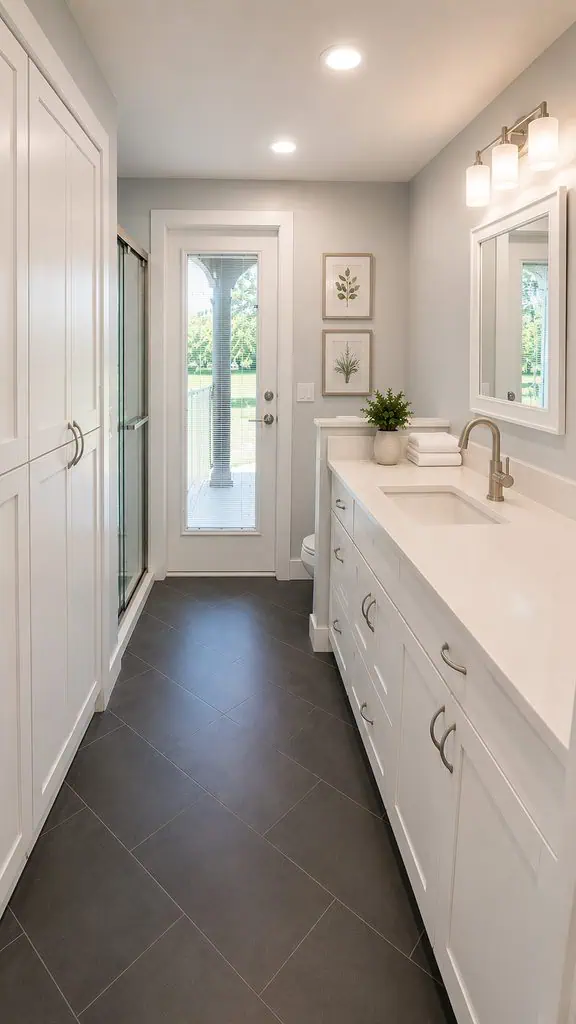
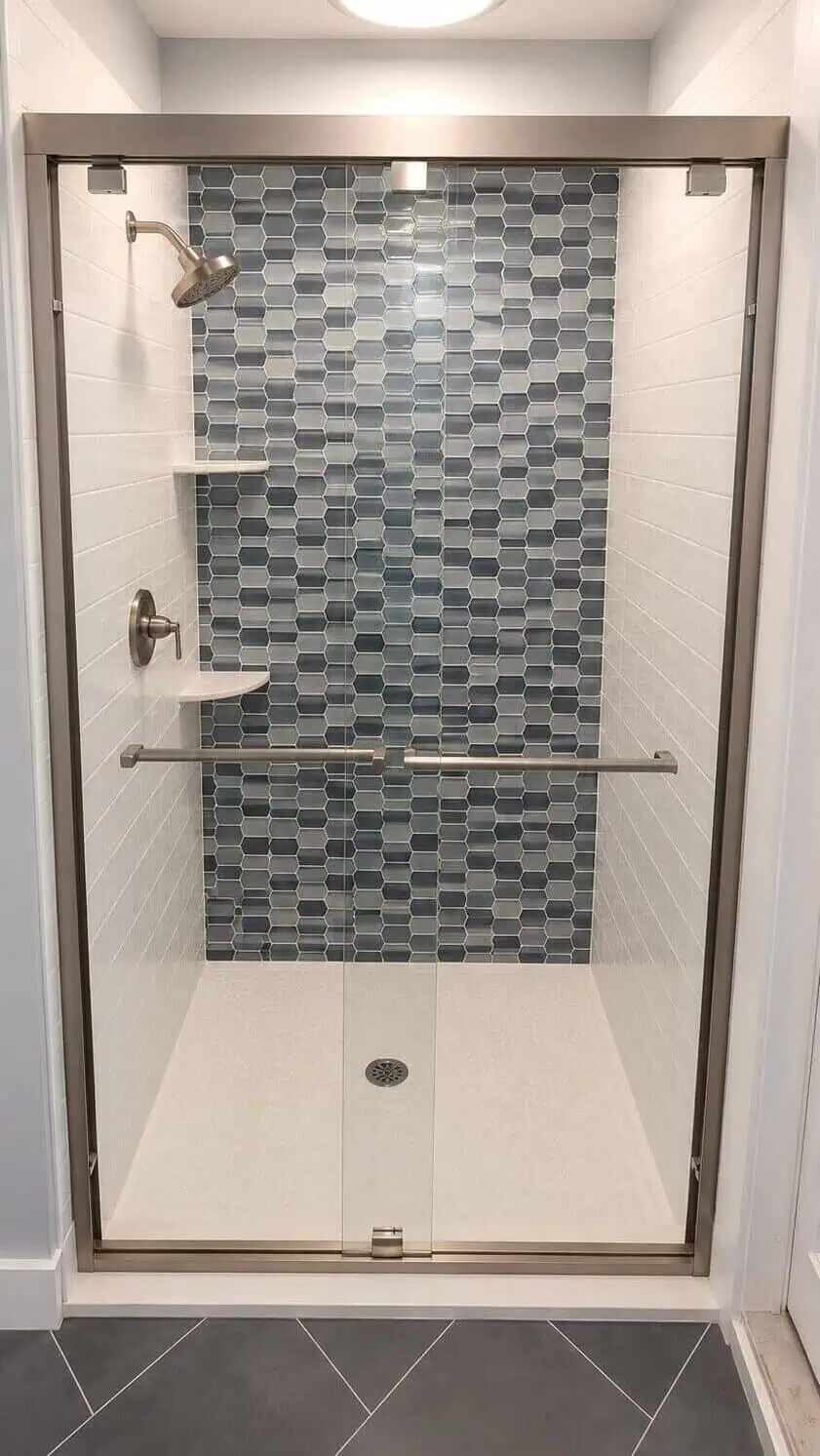
Mold Isn’t a Cleaning Problem. It’s a Construction Problem.
If there’s mold or mildew in your bathroom, the room is telling you something. Nine times out of ten it isn’t a housekeeping failure — it’s a design or construction failure. Water is getting somewhere it shouldn’t, or moist air has nowhere to go, and no amount of bleach fixes either one.
In a Florida bathroom, both are easy to get wrong:
- Waterproofing behind the tile. Tile and grout are not waterproof — the membrane behind them is. Get that layer wrong and the wall gets wet every single shower, invisibly, for years.
- Where the shower meets everything else. Corners, curbs, niches and the drain are where failures start. They’re detail work, and detail work is where a rushed job shows.
- Ventilation that actually moves air. An undersized fan, or one venting into the attic instead of outside, turns every shower into a humidity problem for the whole house.
- What’s already behind the wall. In a humid climate an older bathroom often has damage nobody knew about. We find out what we’re dealing with before we close it back up, not after.
This is the part of the job you will never see and never think about again — which is exactly why it’s where corners get cut. We build the assembly to last, and we don’t cover anything we wouldn’t want to stand behind for the five years our workmanship warranty runs, or the twenty after that.
How Long Does a Bathroom Remodel Take?
Straight answer: most bathrooms take about three to four weeks of actual work in your house, and about two to three months from the day you sign — and most of that gap is waiting on materials, not on labor.
- Design and selections — two to four weeks. However long it takes you to be sure. Tile, vanity, fixtures and glass all have to be chosen before anything is ordered.
- Ordering and lead times — three to six weeks. Vanities and specialty tile are the long poles. Nothing starts in your house until the material is here, so you keep using your bathroom the whole time.
- Demolition and rough-in — about a week. Out with the old, then plumbing and electrical set for the new layout, and inspected.
- Waterproofing and tile — one to two weeks. The slowest stretch and the one that can’t be rushed. Membranes and mortar cure on their own schedule.
- Vanity, fixtures, glass and final touches — about a week. Shower glass is templated after the tile is set, so it lands near the end. Then it’s yours.
Every bathroom is different — a 1970s house with cast-iron drains has surprises a 2005 house doesn’t, and an association may have its own working-hours rules. So take the ranges above for what they are: a good-faith general guide drawn from typical projects — not a bid, a quote, or a commitment on yours. Until we’ve seen the room and put the scope of work in a written estimate, nobody can honestly promise your bathroom a schedule, and we’d rather be the contractor who says that up front. Once the scope is set, you get a real schedule for your bathroom — in writing.
Bathroom Remodeling FAQs
Why Palm Beach County Homeowners Choose Topnotch
- Florida State Certified Residential Contractor — CRC1332966, licensed and insured.
- 30+ years of remodeling craftsmanship — bathrooms in every condition Florida can produce.
- NARI Certified Kitchen & Bathroom Remodeler — a certification specific to exactly this work.
- A five-year workmanship warranty, in writing.
- Family owned and operated. You’ll deal with the same people from the estimate to the last piece of trim.
- We protect your home. Drop cloths down, work areas sealed off to contain dust, and the site cleaned every day — you still live here while we work.
- We answer afterward. A warranty part, or something that got knocked in a move: you call us, we handle it.
We measure our own work by five questions, and we’d rather you hold us to them: did we meet your expectations, are you thrilled with the result, were you pleased with the experience, would you use us again, and would you recommend us to your friends?
Choosing a Bathroom Contractor: A Homeowner’s Guide
Useful whether or not you hire us. Bathrooms are where the gap between a good contractor and a cheap one shows up soonest.
Ready to Start Your Bathroom?
The in-home estimate is free and there’s no obligation. We’ll look at the room, talk through what you want, and tell you honestly what it takes.
What Drives the Cost of a Bathroom Remodel
We’re not going to put a number on this page, because any contractor who quotes your bathroom before seeing it is guessing — and the guess is always low. What we can do is tell you honestly what moves the number, so you can think about your own budget before we ever meet.
- Whether the plumbing moves. Keeping the toilet, sink and shower where they are is the single biggest saving available. Relocating them — especially drains, and especially on a slab — means opening the floor, and that’s real money. It’s why the layout conversation comes first.
- How much tile, and which tile. Floor-to-ceiling costs more than a wainscot, large-format costs more to set flat, and intricate patterns, mosaics and niches are labor as much as material. Tile is usually the biggest single line, and the one with the widest range.
- The level of fixtures and cabinetry. A stock vanity and a stock faucet, or custom cabinetry and a designer fixture package — same layout, very different total. This is the part you have the most control over once the room is designed.
Two other things worth knowing: older houses cost more, because what’s behind the wall is unknown until it’s open, and a written allowance for tile and fixtures is how a good estimate handles selections you haven’t made yet. Ours are written down, not verbal.
Our in-home estimate is free and it’s detailed — line items, not a lump sum. If your budget and the bathroom you’re describing don’t match, we’ll say so at the estimate rather than three weeks into a project.
Tub, Shower, or Both?
It’s the question we’re asked most often, and the honest answer is that it depends on the house, not on the trend.
Converting a tub to a shower is the most common request we get, and usually the right call for a primary bathroom. Most people stopped using that tub years ago, and the space buys a genuinely larger shower — room for a bench, a niche that isn’t an afterthought, and a glass panel instead of a curtain. If mobility is any part of your thinking, a walk-in or curbless shower is also far easier to use than climbing over a tub wall.
Keeping a tub makes sense more often than people expect. If you have small children or grandchildren who visit, you want one. And most buyers still expect at least one tub in the house — so if this is your only one, think about the guest or hall bathroom before you commit. Keeping a tub in a secondary bath and converting the primary to a big shower is the combination that satisfies almost everyone.
Both, in one room, works when the room is genuinely big enough — and looks cramped and half-hearted when it isn’t. We’ll tell you honestly which one yours is. A freestanding tub needs real clearance around it to look the way it does in photographs.
What matters more than the choice itself is that it’s made early. Tub and shower plumbing sit in different places, so this is a layout decision, not a fixture decision — changing your mind after rough-in is expensive.
Up North for the Summer? Come Home to a Finished Bathroom.
A tremendous amount of our work happens in the off-season, while seasonal residents are up north. An empty house is the easiest place to remodel a bathroom well — especially the only one on that floor, and especially while tile is curing.
Many Palm Beach County associations restrict renovation work to the off-season too, and the rules vary building to building. We know those calendars and plan your project around them.
Hand us the keys and we’ll send progress photos as the work moves. You come home to a finished bathroom.
Bathroom Remodeling Across Palm Beach County
Boca Raton · Boynton Beach · Delray Beach · Gulf Stream · Highland Beach · Juno Beach · Jupiter · Jupiter Farms · Lake Park · Lake Worth · Loxahatchee · North Palm Beach · Ocean Ridge · Palm Beach County · Palm Beach Gardens · Royal Palm Beach · Tequesta · Wellington · West Palm Beach
Get Your Free Bathroom Design Consultation
Tell us about your bathroom and we’ll set up a time to come see it. No charge, no obligation — just measurements, honest answers, and a clear picture of what your bathroom could be. Prefer to talk? Call 561-244-9960.
Get Your Free Estimate
Your Palm Beach County Kitchen & Bath Specialists
30+ years of remodeling craftsmanship — Florida State Certified (CRC1332966), insured, and family-owned, with a five-year workmanship warranty behind every job. Let’s talk about your project.